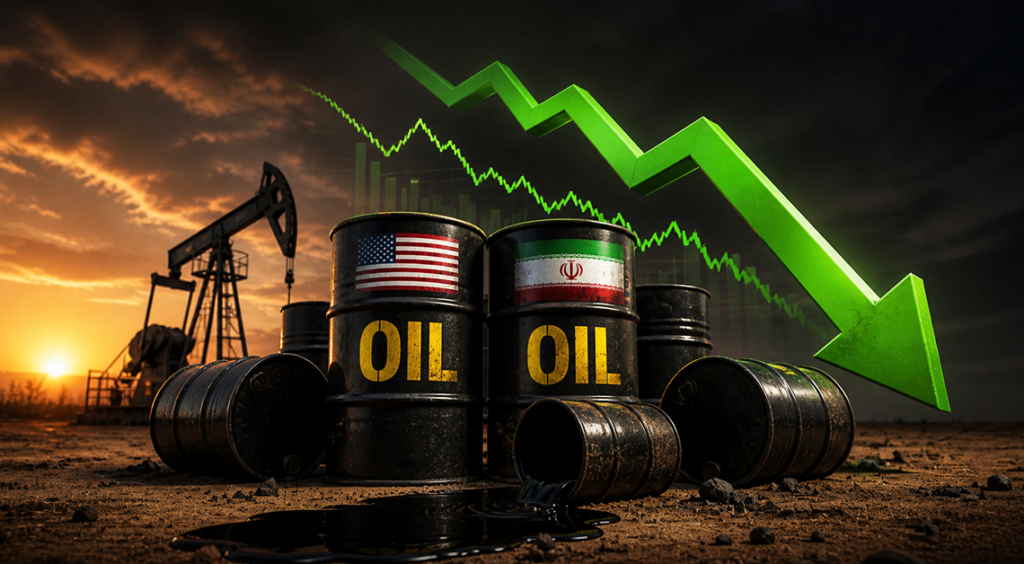
Oil prices set for further gains as Middle East conflict threatens exports
Synopsis
Oil prices may extend gains as the Iran conflict threatens key export facilities and keeps the Strait of Hormuz closed, raising fears of major supply disruptions.
Oil prices could rise further when markets open on Monday as the US-Israeli war against Iran enters its third week, threatening key export facilities and keeping the Strait of Hormuz closed in what could become the largest disruption to global oil supply in years.
Key highlights
- Oil prices surge more than 40% this month amid Middle East conflict
- Strait of Hormuz shutdown threatens one-fifth of global oil supply
- IEA to release over 400 million barrels from strategic reserves
- Key Gulf facilities such as Fujairah and Ras Tanura seen as vulnerable
- Global oil supply could fall by up to 8 million barrels per day
Oil prices surge amid escalating conflict
Brent crude and US West Texas Intermediate futures have already surged more than 40% this month, reaching their highest levels since 2022.
The sharp increase follows US-Israeli attacks on Iran that prompted Tehran to halt shipping through the Strait of Hormuz, a strategic waterway that carries about one-fifth of global oil supply.
The disruption has raised fears of a prolonged supply shock in global energy markets.
Strategic oil reserves set for release
The International Energy Agency (IEA) said on Sunday that more than 400 million barrels of oil reserves will soon be released to help stabilise markets.
Stocks from Asia and Oceania will be released immediately, while reserves from Europe and the Americas will become available at the end of March.
The planned release would mark a record drawdown of strategic reserves aimed at easing price spikes caused by the conflict.
Gulf export facilities at risk
Energy analysts warn that key oil infrastructure across the Gulf could become targets as the conflict escalates.
Iranian drones struck a major oil terminal in Fujairah in the United Arab Emirates shortly after US strikes on Iran’s Kharg Island oil export hub.
“This marks an escalation in the conflict,” said Natasha Kaneva, an analyst at JPMorgan.
JPMorgan analysts also listed Saudi Arabia’s Ras Tanura export terminal and Abqaiq oil processing facilities among critical and vulnerable energy infrastructure in the region.
Fujairah operations resume
Oil loading operations at Fujairah have resumed following the drone attack, according to an industry source based in the emirate.
The port of Fujairah is located outside the Strait of Hormuz and serves as an important export outlet for the United Arab Emirates’ Murban crude oil.
The facility handles roughly 1 million barrels per day, equivalent to about 1% of global oil demand.
Supply disruption could deepen
The IEA estimates that global oil supply could decline by about 8 million barrels per day in March due to shipping disruptions.
Middle Eastern producers have already reduced output by at least 10 million barrels per day, further tightening global supplies.
These disruptions have intensified concerns that energy prices could remain elevated if the conflict continues.
US seeks coalition to secure shipping route
US President Donald Trump has urged allies to deploy warships to help protect shipping routes in the Strait of Hormuz.
According to a report by The Wall Street Journal, Trump plans to announce a coalition to escort ships through the waterway as early as this week.
The United States has also threatened further strikes on Iran’s Kharg Island oil export hub after targeting military facilities there on Saturday.
Iran responded with warnings of additional retaliation.
Diplomatic efforts stall
Attempts by Middle Eastern allies to launch diplomatic negotiations have been rejected by the Trump administration, according to sources familiar with the discussions.
Iran has also ruled out a ceasefire until US and Israeli military strikes stop, reducing the likelihood of a near-term resolution.
However, US Energy Secretary Chris Wright said on Sunday that he expects the war with Iran to end within “the next few weeks.”
He added that oil supply could recover and energy prices may fall once the conflict concludes.
What happens next
Oil markets will closely monitor developments in the Middle East conflict, the effectiveness of the IEA’s strategic reserve release, and any potential military or diplomatic actions affecting shipping routes.
Further escalation or prolonged disruption in the Strait of Hormuz could push oil prices significantly higher in the coming weeks.
FAQs
Q1: Why are oil prices rising?
Oil prices are climbing due to the Middle East conflict involving Iran, which has disrupted shipping routes and threatened major oil export facilities.
Q2: Why is the Strait of Hormuz important?
The waterway carries about 20% of global oil supply, making it one of the most critical energy transit routes in the world.
Q3: What is the IEA doing to stabilise the market?
The International Energy Agency plans to release more than 400 million barrels from strategic reserves to help offset supply disruptions.
Q4: Could oil prices rise further?
Yes. Analysts say prices could increase further if shipping disruptions continue or oil infrastructure in the Gulf is damaged.
Follow Inspirepreneur Magazine for the business news.

I write about markets, money, and the macro forces that move them. Passionate about turning complex economic trends into sharp, easy-to-understand stories. Off the clock, it’s hip hop, rock, reggae -- and a mix of cricket and basketball.