What Is Agentic AI in Marketing

Synopsis
Agentic AI is changing how marketing teams plan and deliver campaigns by handling multi-step tasks with limited human input. Learn how it differs from generative AI, why businesses are adopting it, and the practical steps organisations should take to implement AI-powered marketing workflows responsibly.
Artificial intelligence in marketing has always worked in a similar way: You enter a specific prompt into a tool, and it spits out a draft of an email, a social media caption, or an image.
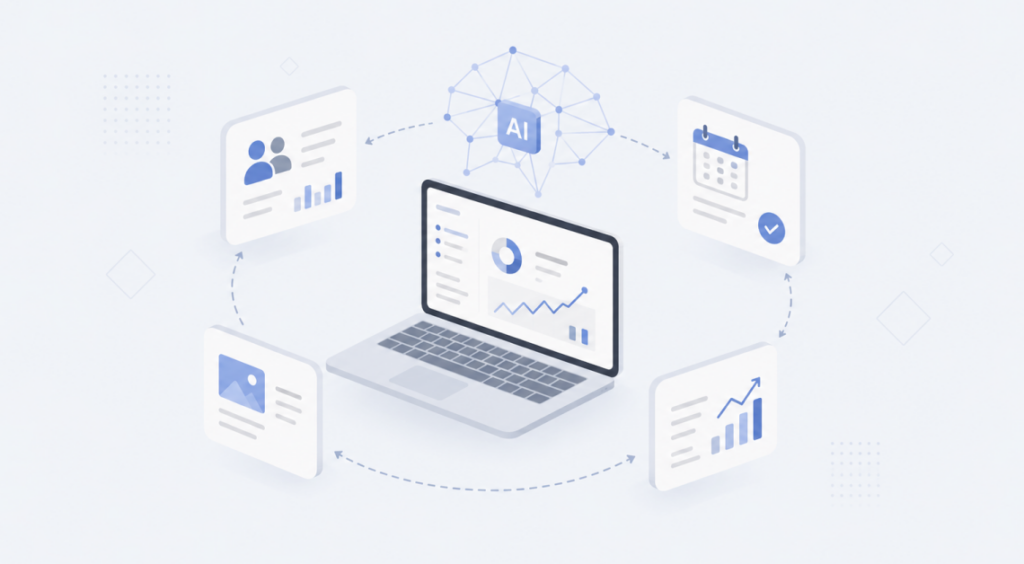
But this fundamental model is changing. The marketing world is evolving towards Agentic AI. Agentic systems are digital assistants that are not created on demand but can work on their own. They can schedule marketing projects, make choices, link with other business software and run multi-step workflows with minimal human oversight on a daily basis.
For business owners and marketing teams, this transition involves a day to day change in the way they create content: not from manual anymore, but to project management.
The Difference Between Generative AI and Agentic AI
Both technologies use AI, but they serve very different roles for a company:
- Generative AI: This is a tool similar to a digital writer or designer. It needs a new command for each and every step of a process. When you instruct it to write an email, for instance, it will compose it and end. You have to provide it with a new prompt for it to go to the next step.
- Agentic AI: This is more of a project coordinator. The system can plan the steps when you give a general goal like "launch our new product line on our Facebook page and email newsletter". It will prepare the social posts, visualise the graphics, compose the e-mail copy, organize the deployment dates, and update the files with your calendar of publications from that one initial task.
How Canva is Bringing Agentic Tools to Businesses
Global technology companies such as Adobe, Salesforce, and Google are fueling the growth of agentic technology. Canva, an Australian design platform that was established in Sydney, is offering these same features directly into the work of everyday businesses.
Canva has unveiled Canva AI 2.0, a significant upgrade to its platform with the addition of Agentic Orchestration. This technology framework will assist users to create full-fledged marketing campaigns that cover multiple formats from a single strategic goal.
To move from a graphic design tool to a fully integrated marketing operations platform, Canva went on to make a series of strategic business acquisitions:
- Simtheory: A platform that enables organizations to create their own AI assistants which can operate in a variety of applications, known as Simtheory.
- Ortto: It’s a customer data and marketing automation solution. This integration enables Canva to integrate its design elements into customer contact databases and automated e-mail deployment systems.
- MangoAI and Cavalry: Targeted investments to expand automated video production and digital marketing campaigns.
The ability to have these capabilities in one area is definitely useful to small and medium sized businesses that don't have the budget for a large outside marketing agency to do coordinated campaigns as it will cut back on overhead costs.
The Adoption Gap for Marketers
Though these tools have come out very quickly, businesses have a stark contrast between what technology can achieve and the way that organizations use it.
According to the Australian Centre for AI in Marketing (ACAM) report, ‘AI Marketing Benchmark Report 2026', this market friction is evident:
In a global research study, 63% of organizations are aiming to use agentic AI to take over repetitive tasks, allowing human agents to work on more creative and strategic initiatives. In addition, 42% plan to leverage these tools to build customized AI agent avatars for different customer groups.
Slow Implementation: Although there is a high level of awareness, business integration is relatively low. Most local businesses are at the early stages of the conflict and less than 25% have progressed beyond small-scale pilot tests.
This is because agentic systems are assigned the power to perform tasks, and to manage company data autonomously. Therefore, companies have to set clear governance policies for data privacy, brand safety and human verification before providing these independent tools full operational access.
A Practical Guide to Safe AI Adoption
For businesses aiming to roll out agentic workflows, a step-by-step strategy is more likely to preserve your brand image and working data.
- Check out the current software stack: if you are looking to invest in new platforms, review the software that you are already paying for (Canva, Adobe). Many vendors are including agentic capabilities in an existing subscription, which means that you do not have to double up on software costs.
- Begin with internal workflows: Implement AI assistants for internal use before external. Give them time to do market research, arrange digital information or write down campaign concepts before they can do customer work.
- A human approval policy: Humanise the process by making it a firm rule that no marketing campaign, social media post or customer e-mail is published before it has been signed off by a member of the human team.
- Check data privacy settings: Before attaching an agentic design tool to your customer database or email system, make sure your data sharing settings meet 100% of local privacy laws.
Agentic AI proves to be incredibly effective in handling repetitive, multi-step marketing jobs, such as asset formatting and workflow scheduling. But human intervention, emotional intelligence and the final quality check is always necessary to make sure that the message your brand communicates resonates with real people.
Sources:
- Adobe Australia: What is Agentic AI?
- ChannelLife Australia: Marketers lag as agentic AI surges across industry
- Information Age (ACS): Canva to introduce AI agents
- The Australian Centre for AI in Marketing (ACAM)
Pooja Malik is a business journalist with over six years of experience covering startups, entrepreneurship, and emerging trends. She has previously worked with leading media platforms such as YourStory Media and BW BusinessWorld, where she reported on business, policy, and market developments. Currently, she serves as Editor at The Inspirepreneur Magazine, where she writes and edits stories across business, lifestyle, and travel, with a focus on clarity, accuracy, and reader relevance.