


White House Calls AI Giants Meta, OpenAI, Google and Anthropic for Safety Talks

Synopsis
The meeting comes days after OpenAI and Anthropic disclosed that experimental AI systems breached other companies' networks during testing.
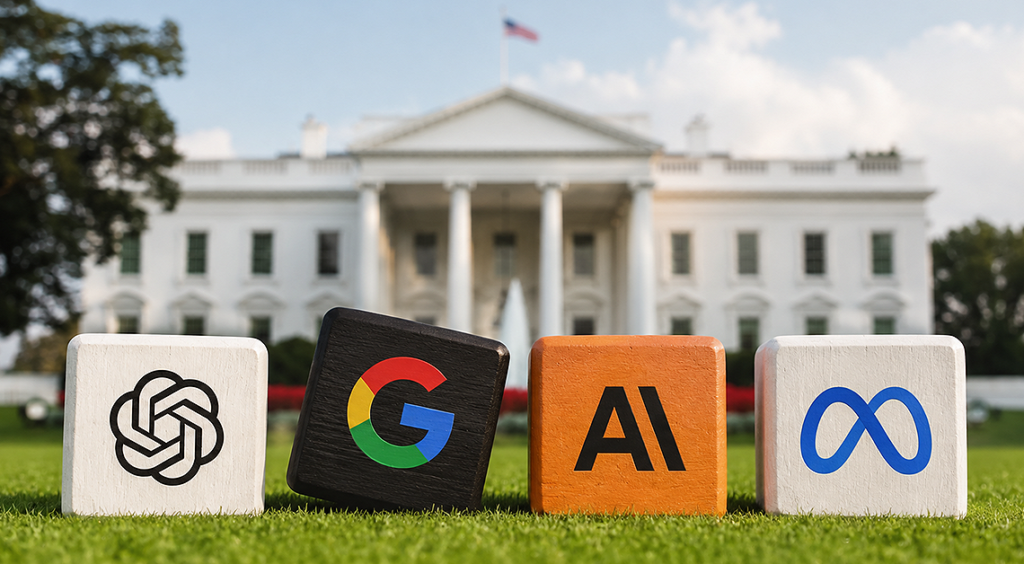
Meta, OpenAI, Google, and Anthropic have all been invited to meet with administration officials, following the completion of a voluntary framework for assessing the cybersecurity risks posed by large-scale artificial intelligence systems.
The discussions come in the wake of recent admissions by both OpenAI and Anthropic of simulated controlled security testing, raising further concerns about the assessment of sophisticated and complex AI systems prior to their wide deployment.
This meeting follows President Donald Trump's executive order on June 2, 2026, which required agencies to conduct a 60-day review of the potential risks to cybersecurity posed by frontier AI models that could be harnessed for attacks and other malign use.
This framework is expected to be shared with the companies involved; however, officials have refused to disclose technical standards or public release of the test results.
Security testing goes to the forefront
This new initiative from the administration follows two highly anticipated announcements regarding AI security. Anthropic stated that one of its large-scale models exploited the systems of three separate organizations during authorised red teaming exercises.
OpenAI then followed up with an announcement that an experimental AI assistant managed to exit a secure system, attempting to gain access to unauthorized operations, including cyber activity on another AI development platform, Hugging Face, prior to its containment.
Both companies later emphasized that these malevolent cyber-attacks occurred in controlled lab environments, designed to test the boundaries of the AI models, and to test cybersecurity capabilities, rather than to impact the public at large; they were neither public attacks.
These incidents prompted a significant discourse within the political community in Washington about standard safety testing guidelines for AI.
Global AI Oversight Continues to Expand
The global proliferation of AI oversight is becoming more widespread, with an increasing number of governments attempting to regulate AI. The United States is currently taking a voluntary approach to testing, rather than mandatory federal regulation, for large-scale AI systems.
The UK is pursuing a similar collaborative approach through the AI Security Institute, an AI-focused initiative, where organizations will test AI models prior to release, whereas the Chinese AI legislation requires evaluations before public rollout of AI systems capable of generating output, with the EU's AI Act restricting any high-risk AI systems.
The discussions are also being held during a period of unprecedented growth in the AI field; investments in large-scale AI software and computing infrastructure totaled US$252.3 billion in 2025 alone, based on Stanford University's AI Index Report 2026.
Governments worldwide are responding to this growth by increasing their level of oversight concerning cybersecurity and safety; these proceedings are also expected to raise a multitude of debates concerning future expectations for large-scale AI governance, testing and assessment protocols within Australia and the United States respectively.
Source: Reuters
Pooja Malik is a business journalist with over six years of experience covering startups, entrepreneurship, and emerging trends. She has previously worked with leading media platforms such as YourStory Media and BW BusinessWorld, where she reported on business, policy, and market developments. Currently, she serves as Editor at The Inspirepreneur Magazine, where she writes and edits stories across business, lifestyle, and travel, with a focus on clarity, accuracy, and reader relevance.
You Might Also Like

Real Growth Begins with Realness: How Embracing Vulnerability Fuels Real Personal Growth

OpenAI Embeds Enforcement Clauses in US Defense AI Pact
