


TechnologyOne: Building a Unified ERP Platform Through Consistent Product Design

Synopsis
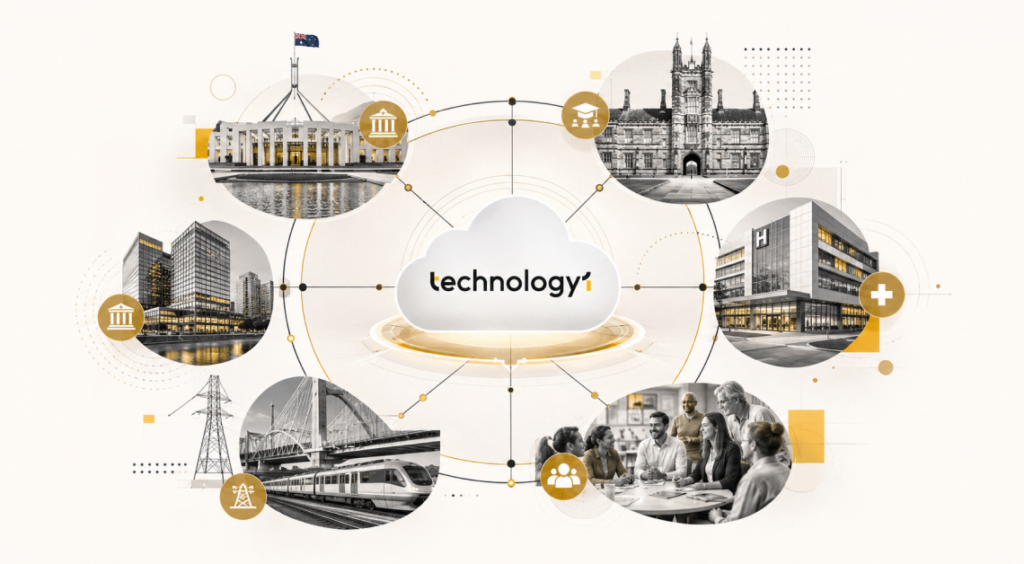
This case study examines TechnologyOne’s transition from financial software provider to SaaS ERP company, highlighting its single-platform architecture, government and education focus, key milestones, and the strategic decisions shaping its growth trajectory.
Enterprise software firms tend to be formed over time via acquisition. However, TechnologyOne has taken a different course. Founded in 1987, the company has been dedicated to developing an integrated system for the management of the core business functions.
Today, TechnologyOne operates as a cloud-based ERP solution for governments, universities and large organisations throughout Australia, New Zealand and the United Kingdom.
The Brisbane headquarters and the corporate office in Barangaroo are financial software service providers, and the company has become a SaaS business with recurring revenue as its core.
The Starting Point: A Practical Problem to Solve
Adrian Di Marco's first insight is the foundation of TechnologyOne. During the late 1980s, the majority of organizations used different systems for finance, payroll, and operations. These systems typically did not communicate effectively and resulted in duplication and manual efforts.
The initial business of the company was with financial management software. It grew in the course of time to other areas of activity, including human resources, asset management and procurement. Instead of creating them as stand-alone products, TechnologyOne designed them to work together within a system that can share data and processes.
This gave the company a long-term trajectory. The integration did not happen as an extra added value, but as a starting point from the beginning.
Key Milestones in Its Evolution
TechnologyOne has developed slowly, with regular product releases and a change in how they are sold.
TechnologyOne Timeline
| Year | Milestone |
| 1987 | Company founded in Australia |
| 1999 | Listed on the Australian Securities Exchange (ASX) |
| Early 2000s | Expansion into a full enterprise suite |
| 2010–2015 | Investment in cloud capabilities begins |
| 2019 | Ci Anywhere platform scaled for SaaS delivery |
| 2021 | Formal SaaS-first strategy announced |
| 2023 | Majority of customers transitioned to SaaS |
| 2026 | Continued growth in subscription-based revenue |
These milestones are derived from company disclosures and reporting in TechnologyOne and ASX reports.
A Single Platform at the Core
The crux of TechnologyOne's product is its Ci Anywhere platform. It is developed as a multi-tenant SaaS application that provision lines multiple customers on identical core infrastructure but maintains data isolation.
What Defines the Platform
- Shared Architecture
A common data model is used for all applications, decreasing departmental inconsistencies.
- Cloud Delivery
All updates are centrally controlled and customers don't need to upgrade to a different version.
- End-to-End Control
The company develops its own platform and doesn't use third-party ERP.
- Configurable Design
Organisations can customise their workflows, reporting, and interfaces without having to create any custom software.
This setup enables businesses to run multiple functionalities in a unified environment, instead of in separate systems.
Product Coverage Across Business Functions
TechnologyOne's platform comprises of a number of key modules:
- Budgeting and reporting in financial management (2.5% of all weightage)
- Human resources and payroll systems
- Areas of the supply chain and procurement processes.
- Determine the value of assets and properties.Evaluating Asset and Property.
- Educational management systems for universities.
- Analytical and reporting tools.
The modules are integrated, thus, no duplication of data is made. An example of this is financial data and HR data are integrated in the same system, which makes it easier to report and monitor.
The SaaS model has boosted recurring revenue, and given enterprises greater insight into long-term performance, the company reported.
Integration With External Systems
The platform is based on a single system, but organisations frequently require integration with other systems. TechnologyOne is available for a number of integration options:
- The API is REST-based, with JSON as their data format.
- SOAP/XML web services
- Use SFTP to transfer files.
- Structured data access with entity services and reporting layers.
Depending on the configuration, these options can be used for real-time connections or batch data exchange.
Shifting the Business Model to SaaS
A key aspect of the technology firm's growth in recent times has been its movement to a SaaS business model. Previously, they were running a licensing scheme, in which the company had to be installed on customers' own infrastructure.
Business Model Shift
| Period | Model | Characteristics |
| Pre-2010 | Licensing | On-premise deployment, upfront payments |
| 2010–2018 | Hybrid | Combination of on-premise and cloud |
| 2019–2026 | SaaS | Subscription-based, cloud delivery |
The SaaS model has boosted recurring revenue, and given enterprises greater insight into long-term performance, the company reported.
Focus Areas: Government and Education
TechnologyOne's customers are focused in areas where they need dependable, enduring systems:
- Local Councils, Government departments
- The universities and higher education institutions.
- The utilities, as well as asset-intensive organisations, are also included.
Many of these industries are subject to complex regulatory and operational needs. One consolidated system to minimize administration and facilitate compliance.
Strategic Choices That Shaped the Company
TechnologyOne is the fruit of a series of consistent choices.
- Building Internally
The company has not been into acquisitions, but preferred to develop the products internally. This has helped to ensure uniformity of user experience and system design.
- Early Investment in Cloud
It's ironic that the SaaS trend started before it was widely adopted by businesses. This, in turn, gave customers time to make the transition, rather than being forced to do so.
- Sector-Specific Focus
TechnologyOne has focused on the government and education sectors, developing features for those sectors.
- Control Over the Platform
Having the whole technology stack means that the company can handle the updates, performance, and security in-house.
Current Position and Direction
To date, TechnologyOne is still expanding its SaaS business and global footprint. It has the best markets in Australia and New Zealand where growth is continuing, and in the United Kingdom.
The company's focus areas consist of enhancing capabilities of its platform, growing the level of automation of its software and growing customer base in areas where the company has competitive advantages.
Source
TechnologyOne – Official Website
TechnologyOne – About Us
TechnologyOne – Company History
Courier Mail – TechnologyOne Growth Story
The Australian – Adrian Di Marco Journey
Pooja Malik is a business journalist with over six years of experience covering startups, entrepreneurship, and emerging trends. She has previously worked with leading media platforms such as YourStory Media and BW BusinessWorld, where she reported on business, policy, and market developments. Currently, she serves as Editor at The Inspirepreneur Magazine, where she writes and edits stories across business, lifestyle, and travel, with a focus on clarity, accuracy, and reader relevance.
You Might Also Like

CrowdStrike Predicts Higher Fiscal 2027 Revenue Than Expected

Australian Industry Shakeup: SGH Targets BlueScope In $13B Deal
