





Nissan, Uber, Wayve, Announce Robotaxi Partnership In Tokyo
Synopsis
Nissan, Uber and the British AI startup Wayve strike a deal to establish a robotaxi pilot in Tokyo by the end of 2026. The service plans to use Nissan LEAF electric cars equipped with Wayve’s AI driving system, which riders can access through Uber. Uber said it marked its first autonomous vehicle partnership in Japan and was part of a broader strategy to deploy robotaxis in more than 10 cities worldwide including London. The initial phase of the program will include safety drivers in the vehicles. Ahead of its global commercial launch in February 2026, Wayve raised $1.2 billion at an $8.6 billion valuation.
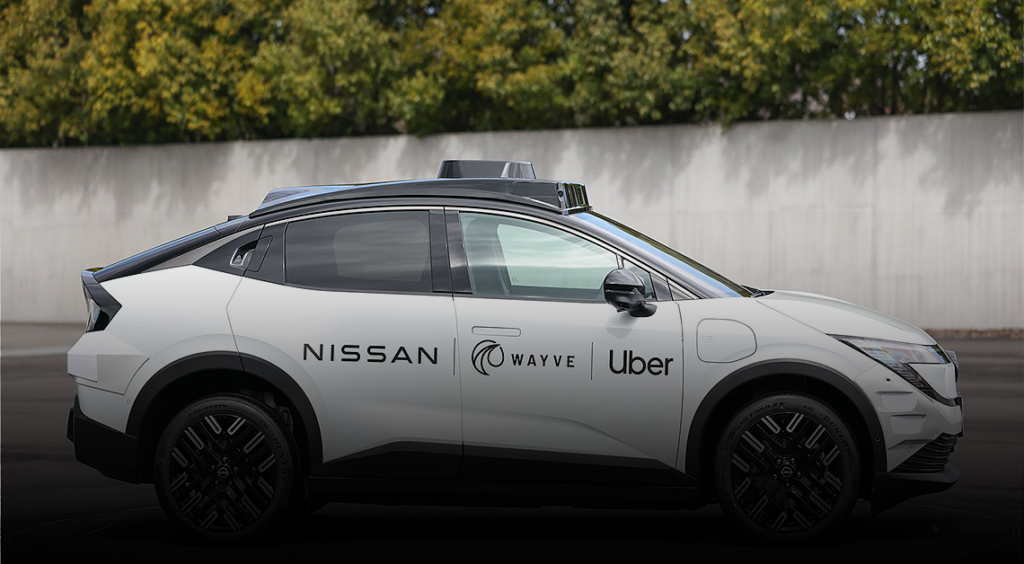
Uber partnered with Wayve and Nissan to introduce a robotaxi pilot in Tokyo by the end of 2026. This will be the first time that Nissan LEAF cars with Wayve’s AI will be available to riders via Uber in Japan.
Highlights
- Nissan, Uber and Wayve struck a deal to launch a robotaxi pilot in Tokyo by late 2026.
- The pilot will utilise Nissan LEAF electric cars outfitted with Wayve’s AI-based self-driving tech.
- This is Uber’s first autonomous vehicle partnership in Japan.
- Autonomous safety drivers are required to sit in the cars for this next phase of testing.
- The Tokyo launch is only a part of a broader plan to deploy robotaxis in more than 10 cities internationally.
Nissan, Uber and Wayve Partner to Launch Robotaxi in Tokyo
Nissan Motor, Uber Technologies and British startup Wayve announced they will work together to develop robotaxis with a pilot programme launch in Tokyo planned for late 2026. The three companies formalised their agreement this week and announced the partnership together. It is a major moment for all three firms. Wayve gets a major market. It’s an opportunity for Nissan to showcase its vehicles in a different kind of service. And Uber lands its first self-driving deal in Japan.
For the pilot, riders will be able to request Nissan LEAF cars running Wayve’s AI Driver technology through Uber’s platform. It is Uber’s first self-driving vehicle project in Japan. Uber hopes to operate through a licensed taxi partner in Japan, and is in the process of selecting the right one. The companies added that it would ensure proper approvals are in place before any car is driven and that they are also working with local authorities.
How the Autonomous Driving Technology Behind It Works
Using Wayve’s base vehicle, Nissan plans for it to support the Wayve AI Driver along with connecting to Uber’s ride-hailing marketplace, pairing robotaxis to people looking for a lift. Wayve’s approach to building its system is different from many self-driving companies. It doesn’t require detailed HD maps of every street. Its AI retrain from the real data of driving and optimise itself to account for new roads.
Tokyo is among the trickiest urban terrains for self-driving vehicles, thanks to its heavy traffic, complex street layouts and tough safety requirements. Wayve’s approach is focused on creating an AI Driver that can learn with real-world data and generalise across streets and cities without an HD map but at a much greater speed to deploy globally. Wayve said it began testing its technology across Japan in early 2025, so it is already getting first-hand experience of how Japanese roads operate prior to the public pilot even beginning.
This Is a Part of the Much Larger Global Plan
Uber contributed to Wayve’s Series D funding round and has also extended additional capital to enable multi-year launches of Wayve-powered robotaxis on the Uber network, scaling across over 10 international markets. The firms are aiming for their first service in London by 2026, with wider international availability to follow. Tokyo is not the final destination. It is just one stop on a much longer journey that Uber and Wayve have already both sunk serious cash into.
In February 2026, Wayve landed about $1.2 billion in funding that allowed the firm to conduct pre-UK robotaxi trials at a valuation of $8.6 billion. There were investors in this round like Stellantis, Mercedes-Benz, and Nissan along with Nvidia, Uber and Microsoft. To have that level of support from both carmakers and tech companies simultaneously is unusual. It signifies that the people who are closest to this technology think it is prepared to graduate from the test zone into actual streets with real passengers. Tokyo and London are the beginning of what all three companies have been building to.
FAQs
1.What was announced by Nissan, Uber and Wayve?
The three firms struck a deal to build and deploy a robotaxi service in Tokyo with Nissan LEAF cars equipped with Wayve’s self-driving AI, bookable via Uber.
2. What is the start date for the Tokyo robotaxi pilot?
The companies expect to start the pilot app project by the end of 2026, but it's still waiting for final approval.
3. Who is going to drive the car?
Trained safety drivers will be driving the cars with passengers during the first phase of the pilot.
Follow Inspirepreneur Magazine for the business news.
At Inspirepreneurs Magazine, covering entrepreneurship, business failures, and the human stories behind the world's most ambitious founders. She writes at the intersection of strategy and storytelling.
You Might Also Like

$14 Trillion Milestone: BlackRock Hits New Global Asset Record

Pentagon Cuts $5.1 Billion in IT and Consulting Contracts
